 FitMyEV
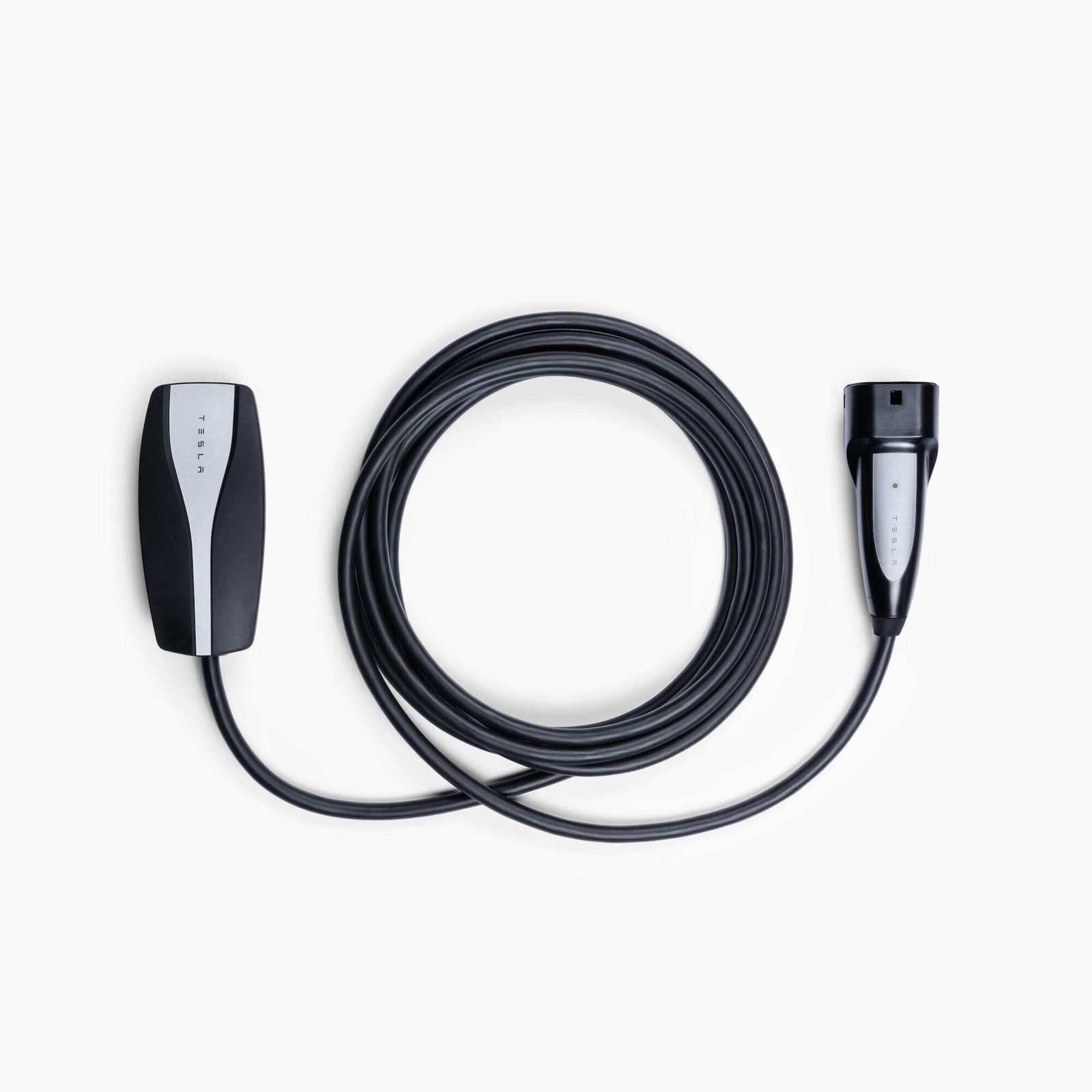
Tesla Mobile Connector (Gen 2) Review — The budget-friendly underdog proves to be the only charger most Tesla owners actually need, despite a few quirky design flaws
TL;DR
At half the price of the hardwired Wall Connector, it delivers more than enough overnight charging speed via a 240V outlet while remaining portable for road trips. However, you'll need to buy a cheap wall bracket to prevent the heavy brick from pulling loose, and you shouldn't re
Verdict: Buy
What people are saying
Sources disclosed below
Reddit Discussion
Across 50 threads in r/TeslaModelY, r/teslamotors
Sentiment summary, not a rating
Pros
- +Highly versatile with interchangeable plug adapters for various outlet types
- +Portable enough to keep in the trunk for road trips and emergencies
- +Significantly cheaper than the hardwired Tesla Wall Connector
- +Delivers plenty of overnight range (up to 30 miles/hour) when paired with a 240V NEMA 14-50 outlet
Cons
- −The heavy control box can pull loose from the adapter if left hanging, causing charging errors
- −Cable management is messy without purchasing a third-party wall cradle
- −Standard 120V charging is painfully slow (3 miles per hour) and inefficient
- −Maxes out at 32 amps, which is slower than the Wall Connector's 48 amps
Alex Rivera
Published May 2, 2026
$230–$275
Price may vary. Updated regularly.
Your Tesla Mobile Connector might be charging at half speed for a ridiculously simple reason: the adapter plug isn't pushed in all the way. It’s a frustrating quirk that has sent more than one owner down a rabbit hole of troubleshooting, but once you get past the finicky connection, this little brick is arguably the most underrated piece of hardware in the Tesla ecosystem.
What you're actually getting
Think of the Gen 2 Mobile Connector as the Swiss Army knife of EV charging. It’s not the fastest tool in the shed, but it’s the one you’ll be glad you have when you’re 300 miles from home or trying to avoid the $500+ installation cost of a dedicated Wall Connector. As Myks Garage aptly put it, "It's almost like a big laptop charger essentially." It’s portable, relatively affordable, and—if you have a NEMA 14-50 outlet in your garage—it’s more than capable of topping off your battery overnight.
However, living with this unit daily requires a bit of finesse. The "brick" (the control box) is surprisingly heavy, and if you let it dangle from a wall outlet without support, gravity becomes your enemy. As Whooshn pointed out, "This has to be totally and absolutely flush with this base unit... or it derates the power by half." If that connection isn't perfect, you aren't just losing speed; you’re potentially creating a heat hazard.
I’ve found that the best way to treat this device is to stop thinking of it as a "mobile" charger and start treating it as a semi-permanent home station that just happens to be removable. If you’re planning to use this as your primary home charger, do yourself a favor and buy a third-party wall mount. It keeps the weight off the outlet and keeps your garage from looking like a tangled mess of cables.
Performance — what reviewers actually measured
| Metric | Value | Context |
|---|---|---|
| Price | $230 - $300 | Half the cost of a Wall Connector |
| 120V (NEMA 5-15) | 3 miles/hr | Emergency use only |
| 240V (NEMA 14-50) | 32 amps / 30 miles/hr | The "sweet spot" for most |
| Wall Connector | 48 amps / 44 miles/hr | Faster, but requires hardwiring |
Where it actually wins
The Mobile Connector wins on pure versatility. Because it uses interchangeable plug adapters, you aren't tethered to one specific type of outlet. If you’re visiting family or staying at an RV park, you can swap the plug and keep moving. It’s the ultimate "peace of mind" accessory.
Furthermore, the value proposition is hard to beat. For roughly $230, you’re getting a reliable 30 miles of range per hour when plugged into a 240V outlet. For the vast majority of commuters who drive 40-60 miles a day, that’s plenty of juice to get back to 100% while you sleep. You’re essentially getting 70% of the performance of a hardwired Wall Connector for less than half the price.
Where it falls short
The biggest issue is the temptation to rely on standard 120V household outlets. While Vegas Carmen suggests it’s fine for daily driving, Myks Garage offers a much more sobering warning: "You could do damage to your home electrical system by pulling maximum amps out of this small outlet." Standard outlets aren't designed for the sustained, high-amperage draw that an EV charger demands. If you use the 120V adapter, keep it for emergencies only, or you risk melting your wall receptacle.
Then there’s the cable management. Unlike the Wall Connector, which has a dedicated holster and integrated cable management, the Mobile Connector is just a loose bundle of wires. If you don't buy a third-party cradle, you’ll end up tripping over it or leaving it coiled on the floor, which is a recipe for a damaged plug or a cracked control box.
Should you buy it?
Buy if you
- Want a cost-effective home charging solution without the expense of a hardwired install.
- Frequently take road trips and want a backup charger for emergencies.
- Have a NEMA 14-50 outlet already installed in your garage.
Skip if you
- Have a long daily commute (100+ miles) and need the fastest possible recovery time.
- Want a "set it and forget it" aesthetic with no dangling bricks or loose cables.
- Are looking for a permanent, weather-proof outdoor charging solution.
The Tesla Mobile Connector is a versatile, must-have charging multi-tool that offers incredible value, provided you manage its weight and respect standard outlet limits.
Sources consulted
- Myks Garage — Tesla Wall Connector vs Mobile Connector | What's the Difference, Which One Should You Buy?
- Vegas Carmen — Tesla Home Charging for Beginners: All Options Explained
- Whooshn — Tesla Mobile Connector Slow Charging at HALF Speed? Overheating? This Could Fix It
- Myks Garage — Tesla Home Charging Options & A Warning Against 120v Regular Outlet Charging W/ Mobile Connector
Synthesis combines independent reviews above. Verdicts and quotes attributed to original creators. Affiliate disclosure: we may earn a commission from qualifying purchases via Amazon links.
Products covered in this review
Frequently Asked Questions
Is the Tesla Mobile Connector (Gen 2) worth buying?
At half the price of the hardwired Wall Connector, it delivers more than enough overnight charging speed via a 240V outlet while remaining portable for road trips. However, you'll need to buy a cheap wall bracket to prevent the heavy brick from pulling loose, and you shouldn't rely on standard 120V outlets for daily charging due to heat risks.
Who is the Tesla Mobile Connector (Gen 2) best for?
Tesla owners who want a budget-friendly home charging setup or need a portable backup for road trips and visiting relatives.
Who should skip it?
Owners who drive over 100 miles daily, want the absolute fastest home charging, or prefer a perfectly clean, hardwired aesthetic without dangling bricks.