 FitMyEV
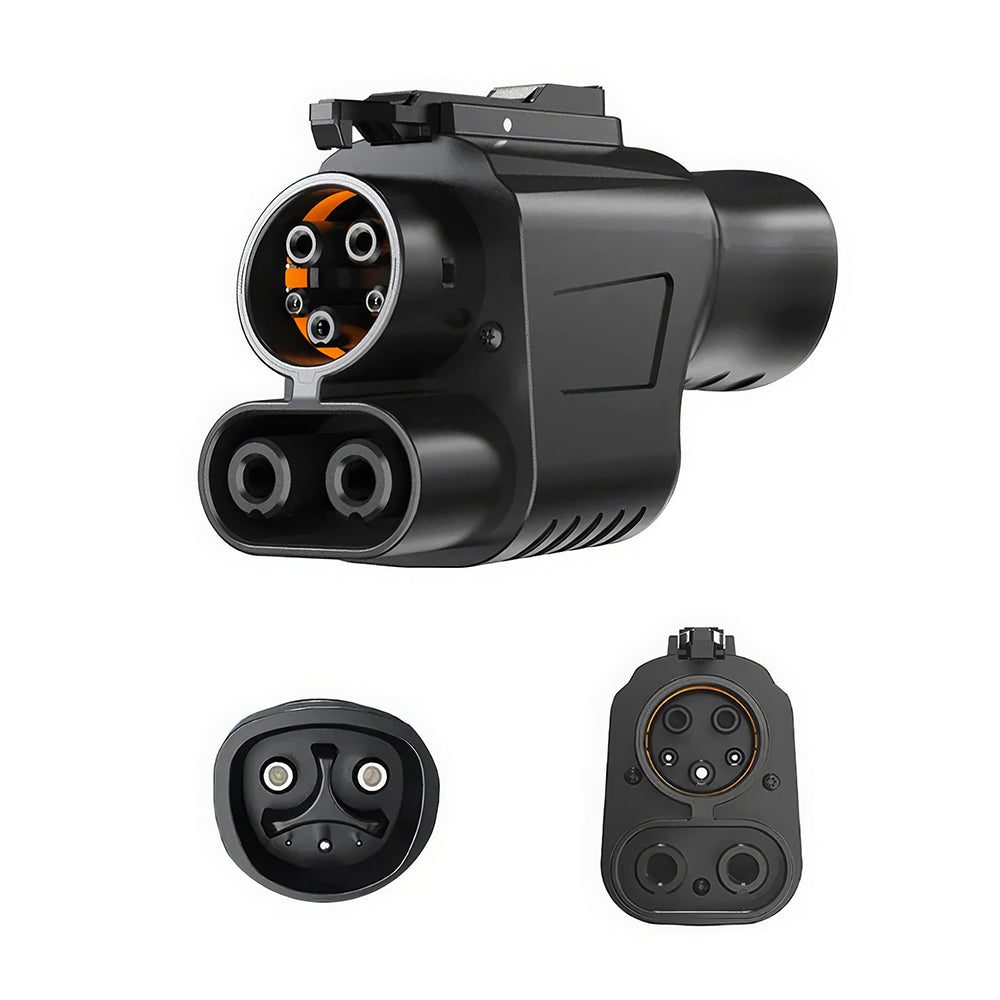
Tesla CCS Combo 1 Adapter (NACS to CCS) Review — A clunky but necessary bridge device that frees Tesla owners from Supercharger exclusivity
TL;DR
While the adapter is heavy and using non-Tesla networks can be clunky, the sheer utility of accessing tens of thousands of additional fast chargers is undeniable. It is a must-have insurance policy for road-trippers, provided your Tesla is compatible without an expensive retrofit
Verdict: Buy
What people are saying
Sources disclosed below
Reddit Discussion
Across 100 threads in r/TeslaModelY, r/teslamotors, r/electricvehicles, r/evcharging
Sentiment summary, not a rating
Pros
- +Doubles available fast-charging network access by opening up third-party stations
- +Capable of high charging speeds up to 250kW
- +Third-party networks can sometimes be cheaper than Tesla Superchargers
- +Provides crucial redundancy and peace of mind for road trips
Cons
- −The adapter is physically heavy and bulky
- −Older Teslas (pre-Oct 2020) require a hardware ECU retrofit to use it
- −Non-Tesla stations often have short cables, leading to awkward parking
- −Requires a precise order of operations to initiate a charge
- −Third-party network apps are less seamless than the native Supercharger experience
Alex Rivera
Published May 2, 2026
$225–$250
Price may vary. Updated regularly.
Tesla's CCS adapter doubles your charging options overnight, but older models face a hidden retrofit fee that might turn this simple accessory into a headache. If you’ve ever felt the cold sweat of a low battery while staring at a map full of non-Tesla chargers you couldn't use, this piece of plastic and copper is your new best friend.
What you're actually getting
Think of the Tesla CCS Combo 1 adapter as a digital skeleton key. For years, Tesla owners were locked into the Supercharger ecosystem, which is fantastic until you’re in a remote area or a congested city center where the only available plug is a third-party CCS station. By snapping this adapter onto your charging cable, you effectively double your fast-charging footprint. As Kim Java put it, "You're basically doubling your charging access overnight."
In practice, this isn't the seamless "plug-and-play" experience you get at a Supercharger. You’re dealing with third-party apps, varying station reliability, and a physical object that feels like a brick in your glovebox. It’s heavy, it’s bulky, and it requires a specific sequence of operations to get the handshake right between the station and your car. As the team at Out of Spec Guide noted, "These adapters as you can see are quite bulky and present additional steps."
If you own a Tesla built after October 2020, you’re good to go. If you’re driving an older model, you’re looking at a potential ECU retrofit. The cost of this upgrade is a point of contention—some sources cite $200, others closer to $450—but it’s a non-negotiable hurdle if you want to use this adapter. Don't let the price of the adapter itself fool you into thinking this is a cheap upgrade if your car isn't natively compatible.
Performance — what reviewers actually measured
| Metric | Value | Context |
|---|---|---|
| Peak Charging (Model X) | 230 kW | Near-Supercharger speeds |
| Charge Time (28-80%) | 20 minutes | Competitive for road trips |
| Peak Charging (LFP Model 3) | 135 kW | Limited by battery chemistry |
| Compatibility Cutoff | Oct 5, 2020 | Requires ECU upgrade if older |
Where it actually wins
The primary victory here is peace of mind. Road-tripping is fundamentally about removing variables, and having the ability to pull into an Electrify America or EVgo station when the Supercharger line is twenty cars deep is a massive quality-of-life upgrade. It turns a "must-wait" situation into a "just-charge" situation.
Beyond the convenience, there’s the financial angle. While Tesla Supercharger pricing is generally fair, some third-party networks offer subscription models or off-peak rates that can actually undercut Tesla’s pricing. If you’re a high-mileage driver, the adapter can eventually pay for itself in charging cost savings, though you’ll need to do a fair amount of driving to offset the $250 entry fee.
Where it falls short
The biggest frustration isn't the adapter itself—it's the infrastructure it connects you to. Third-party CCS stations are notorious for being "hit or miss." As Mike Seguin bluntly put it, "Welcome to the CCS Network where the first charger we pull up to doesn't work." You are trading Tesla’s legendary reliability for a wider net that is often riddled with broken screens, unresponsive payment terminals, and finicky cables.
Then there is the physical design. The adapter is heavy, and because many third-party stations were designed for cars with different charge port locations, the cables are often too short. You’ll find yourself performing awkward parking maneuvers just to get the cable to reach your port without putting excessive strain on the connection. It’s a clunky, manual process that reminds you how spoiled we’ve become by the native Tesla experience.
Should you buy it?
Buy if you:
- Frequently take long-distance road trips where Supercharger coverage might be sparse.
- Live in a city where Superchargers are consistently overcrowded.
- Own a post-October 2020 Tesla that doesn't require a costly ECU retrofit.
Skip if you:
- Exclusively charge at home or work and rarely venture beyond your local area.
- Own a pre-2020 Tesla and aren't willing to pay for the required hardware upgrade.
- Prefer the "plug-and-charge" simplicity of the Tesla network and don't want to deal with third-party apps.
An essential, albeit bulky, glovebox companion that doubles your fast-charging options and cures road-trip range anxiety.
Sources consulted
- Kim Java — Teslas NEW CCS Adapter Blew Me Away | Charges EVEN Faster
- Out of Spec Guide — Tesla Charging Adapters And CCS/NACS Explained
- EVchargerReviews — EV Charging Adapters Explained - Four common adapter types and which ones you need
- Mike Seguin — I Got The CHEAPEST Tesla CCS Adapter... Here's What Happened
Synthesis combines independent reviews above. Verdicts and quotes attributed to original creators. Affiliate disclosure: we may earn a commission from qualifying purchases via Amazon links.
Products covered in this review
Frequently Asked Questions
Is the Tesla CCS Combo 1 Adapter (NACS to CCS) worth buying?
While the adapter is heavy and using non-Tesla networks can be clunky, the sheer utility of accessing tens of thousands of additional fast chargers is undeniable. It is a must-have insurance policy for road-trippers, provided your Tesla is compatible without an expensive retrofit.
Who is the Tesla CCS Combo 1 Adapter (NACS to CCS) best for?
Frequent road-trippers and owners living in areas with congested Superchargers but plentiful third-party options.
Who should skip it?
Owners of older pre-2020 Teslas who don't want to pay for an ECU retrofit, or drivers who exclusively charge at home.