 FitMyEV
Lectron NACS to J1772 Adapter (for non-Tesla EVs) Review — A simple, well-executed niche product that perfectly solves a frustrating infrastructure gap for non-Tesla EV owners
TL;DR
The Lectron adapter flawlessly bridges the gap between Tesla's AC charging network and J1772 vehicles. While the $150 price tag might deter infrequent travelers, its robust build quality and 48-amp charging capability make it a no-brainer for road-trippers and mixed-EV garages.
Verdict: Buy
What people are saying
Sources disclosed below
Reddit Discussion
Across 125 threads in r/Rivian, r/F150Lightning, r/Ioniq5, r/electricvehicles, r/evcharging
Sentiment summary, not a rating
Pros
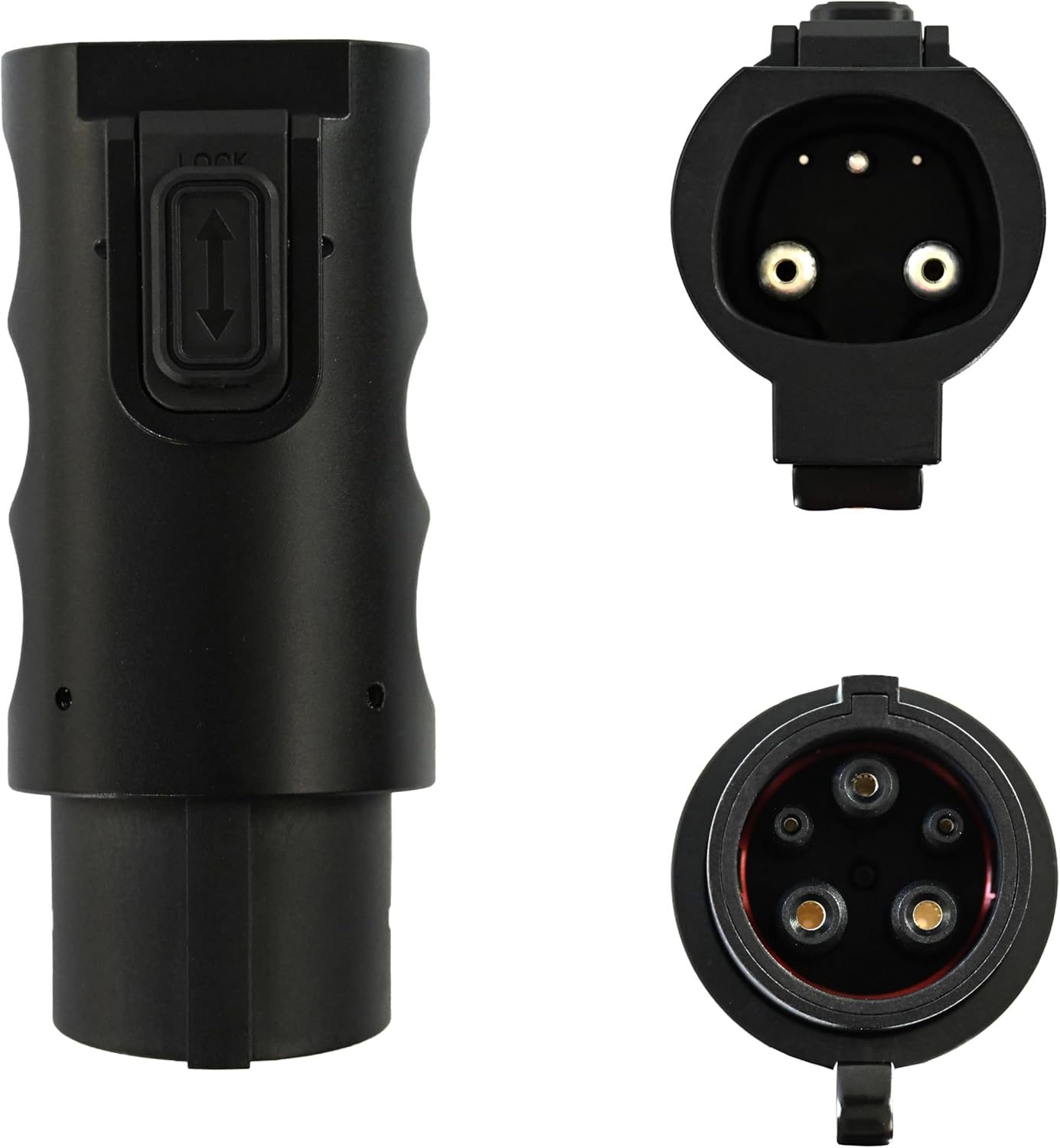
- +Unlocks Tesla Destination Chargers and Wall Connectors for J1772 EVs
- +High build quality with a secure, easy-to-use locking latch
- +Supports up to 48 amps for maximum Level 2 charging speeds
- +Cost-effective alternative to installing a second EVSE in multi-EV garages
Cons
- −Strictly for AC charging; does not work with Tesla Superchargers
- −Pricey at around $150 if only used for very occasional road trips
- −Tesla charger cables are often too short for non-Tesla charge port locations
- −Instruction manual includes absurd warnings like 'do not get wet'
Alex Rivera
Published May 2, 2026
$99–$159
Price may vary. Updated regularly.
Don't let the Tesla logo fool you—this adapter is the ultimate cheat code for non-Tesla EVs. If you’ve ever pulled into a hotel, spotted a row of Tesla Destination Chargers, and felt that familiar pang of range anxiety because your car has a J1772 port, you know exactly why this little piece of hardware is a game-changer.
What you're actually getting
You’re buying a bridge. Specifically, you’re buying a high-quality, 48-amp-rated bridge that connects your non-Tesla EV to the massive ecosystem of Tesla Wall Connectors and Destination Chargers. After using this for a year, the first thing you notice isn't the tech—it's the build. It feels substantial, not like some cheap, hollow plastic toy you’d find on a discount site. The locking latch is crisp and secure, providing that satisfying "click" that tells you you’re actually making a connection.
As the team at Now Let's Review noted, "It looks like the day we got it, like it doesn't wear out. There's nothing to wear out." That’s the beauty of this device. It’s a passive adapter with no complex circuitry to fail. It just passes the electrons through. Whether you’re using it to top off at a hotel or as a permanent fixture in a garage shared by a Tesla and a Ford, it performs with boring, reliable consistency.
However, don't go into this expecting a miracle. This is strictly for AC charging. If you’re looking to pull up to a Tesla Supercharger and get a DC fast-charge, this adapter will do absolutely nothing for you. It’s a common point of confusion, but once you understand the distinction between AC destination charging and DC fast charging, the value proposition becomes clear. As EV-olution put it, "If GM can trust Lectron to build their supercharger adapters, I think we can trust Lectron with their other products." It’s a piece of kit that earns your trust through sheer simplicity.
Performance — what reviewers actually measured
The performance is straightforward, but it’s worth noting the limits of the hardware. You aren't just getting a slow trickle; you're getting full Level 2 speeds.
| Metric | Value | Context |
|---|---|---|
| Max Amperage | 48 amps | Industry standard for home/destination |
| Charging Speed | 11 kW | Full speed for most J1772 EVs |
| Price | $149 | Premium build, reliable performance |
- Front-to-back stability: The connection is solid, but remember that Tesla cables are often shorter than standard J1772 cables. If your charge port is on the opposite side of the car from the charger, you might find yourself playing a game of "how close can I park without hitting the curb."
- Weather warning: The manual includes some bizarre warnings about not getting it wet. In practice, it’s an EV charging component—it’s going to be outside. Treat it with common sense, but don't lose sleep over a light drizzle.
Where it actually wins
The primary win here is versatility. If you live in a multi-EV household, installing a second dedicated EVSE (Electric Vehicle Supply Equipment) can cost you upwards of $800 once you factor in the electrician and the hardware. For a fraction of that cost, the Lectron adapter lets you leverage an existing Tesla Wall Connector. It turns a "Tesla-only" charger into a universal one.
It’s also a massive win for road-trippers. Tesla has spent years building out a network of destination chargers at hotels and resorts. By carrying this adapter, you effectively double the number of places you can reliably charge overnight. It’s the difference between waking up with a full battery and waking up to a frantic search for a public charger three miles away.
Where it falls short
The biggest hurdle is the price-to-utility ratio for the casual driver. If you only take one road trip a year, $150 feels like a steep insurance policy. You’re paying for the peace of mind, but if that peace of mind sits in your glovebox for 360 days out of the year, it’s a tough pill to swallow.
Then there’s the cable length issue. Tesla’s charging infrastructure was designed for Tesla’s port locations. When you add an adapter into the mix, you’re adding a few inches of length, but you’re still at the mercy of the cable’s reach. If you’re in a tight spot, you might find yourself having to park at an awkward angle just to get the plug to reach your port. It’s a minor annoyance, but it’s one you’ll encounter more often than you’d like.
Should you buy it?
Buy if you:
- Share a garage with both a Tesla and a non-Tesla EV and want to avoid buying a second charger.
- Are a frequent road-tripper who stays at hotels that feature Tesla Destination Chargers.
- Value build quality and want an adapter that feels like it will last the life of your vehicle.
Skip if you:
- Are looking for a way to use Tesla Superchargers (this will not work).
- Rarely charge away from home and don't have a Tesla wall charger in your garage.
- Are on a strict budget and only need an adapter for a one-off trip.
An essential, high-quality adapter that unlocks thousands of Tesla destination chargers and solves multi-EV household charging woes.
Sources consulted
- EV Motoring — Can You Charge a Non Tesla with a Tesla Charger? Lectron Tesla to J-1772 Adapter
- State Of Charge — You're Doing It Wrong: Why Your Tesla NACS Adapter Isn't Working, And What To Do About It
- Now Let's Review — An EV Driver Must Have? | Lectron 48A Tesla to J1772 Adapter
- EV-olution — Lectron’s Tesla (NACS) to J1772 Adapter Review
Synthesis combines independent reviews above. Verdicts and quotes attributed to original creators. Affiliate disclosure: we may earn a commission from qualifying purchases via Amazon links.
Products covered in this review
Frequently Asked Questions
Is the Lectron NACS to J1772 Adapter (for non-Tesla EVs) worth buying?
The Lectron adapter flawlessly bridges the gap between Tesla's AC charging network and J1772 vehicles. While the $150 price tag might deter infrequent travelers, its robust build quality and 48-amp charging capability make it a no-brainer for road-trippers and mixed-EV garages.
Who is the Lectron NACS to J1772 Adapter (for non-Tesla EVs) best for?
Multi-EV households (Tesla + non-Tesla) and frequent road-trippers who stay at hotels with Tesla Destination Chargers.
Who should skip it?
Drivers looking to use Tesla Superchargers (this is AC only), or those who rarely charge away from home.